In This Article
Most people carry nothing useful in their trunk. A spare tire they never learned to change. Maybe a jumper cable — but no second car to connect it to. A phone charger that only works in the 12V port.
Roadside problems don't announce themselves. They happen in the dark, on remote roads, in the rain, at the worst possible time. The question isn't whether something will go wrong. It's whether you'll have one thing in the trunk that can actually handle it.

Marcus had a 9 AM client meeting across town. He got in the car at 7:40, turned the key, and heard nothing. Not a click, not a crank — just silence. The battery had been struggling for weeks. He'd noticed the slow start but kept pushing it off.
He didn't have jumper cables. Even if he did, the parking garage was empty at that hour. He called his wife, who suggested calling roadside assistance. The estimated wait: 45 to 60 minutes.
Then he remembered the device his brother-in-law had left in the trunk after a camping trip. Silver, about the size of a large water bottle, with a handle and a digital display. He pulled it out, found the battery clamp cable coiled in the side pocket, and connected the red clamp to positive, black to negative — exactly as labeled. The indicator light on the clamp turned green.
He turned the key. The engine started on the first try.
He made the 9 AM meeting with seven minutes to spare. The device — a jump starter with air compressor built in — went back in the trunk. This time, it stayed there on purpose.

Sarah noticed the pull to the left somewhere around mile 40. By mile 47 she could feel it clearly in the steering — that slow, heavy drag that means one thing. She pulled over onto the gravel shoulder and walked around the car. Left rear. Not completely flat, but close. Maybe 18 PSI where it should be 36.
The spare was in the trunk, buried under luggage from a week away. She knew how to change a tire — technically. She just really didn't want to do it on the side of a highway with trucks going past at 80 miles an hour.
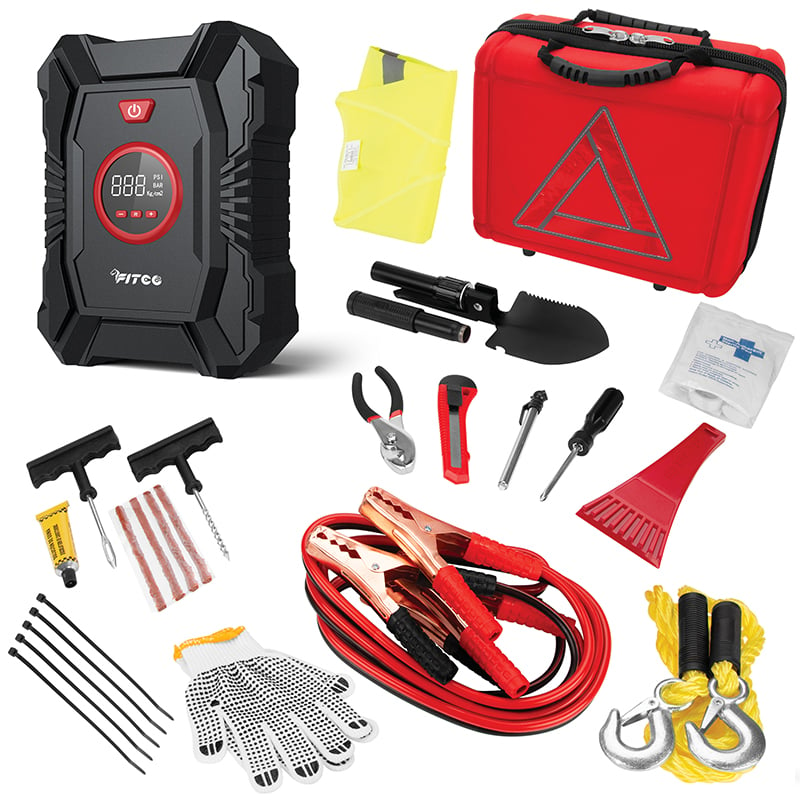
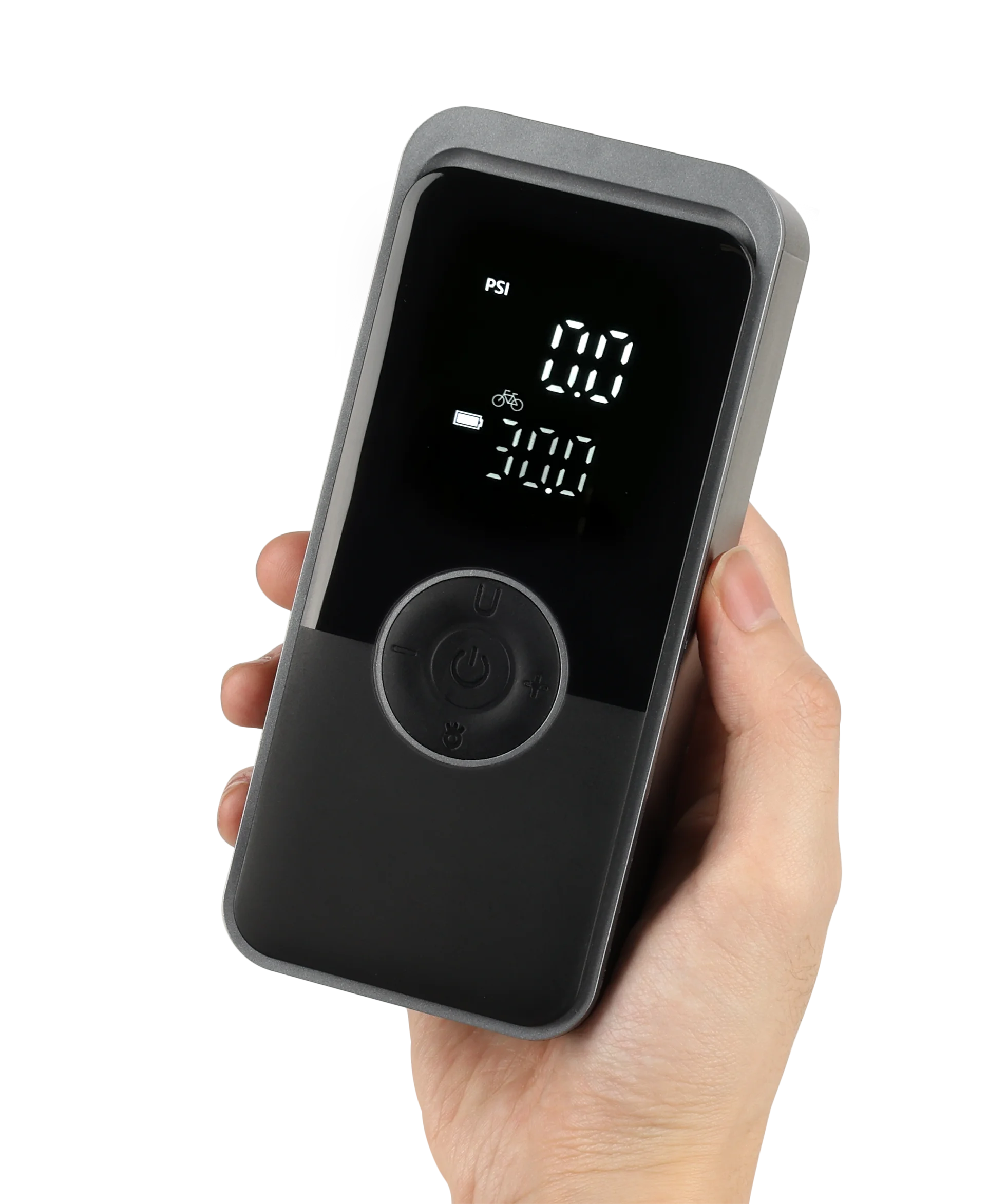
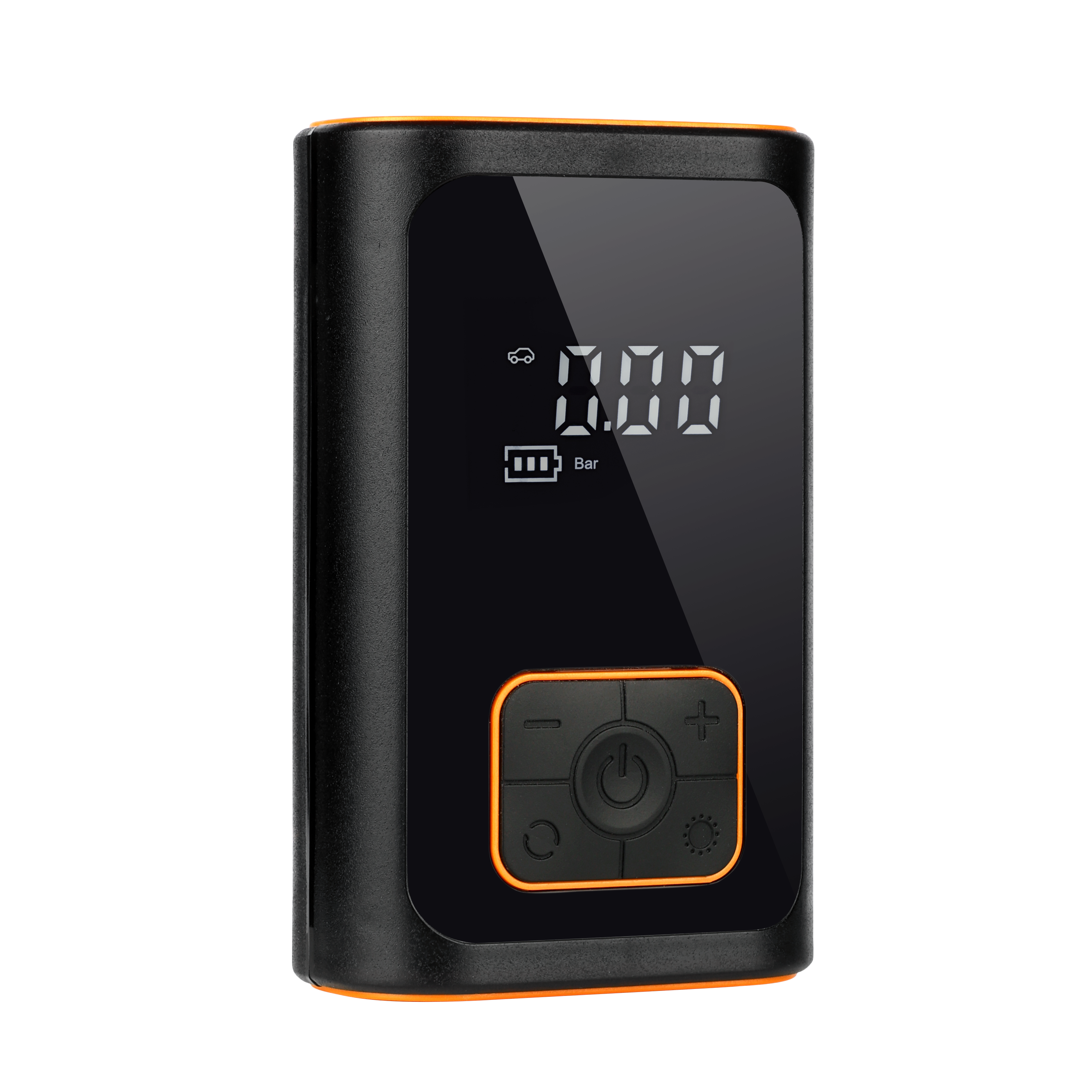
She remembered the device she'd bought before the trip. She found the air hose, screwed it onto the valve stem, and pressed the mode button until the car icon lit up on the display. Then she set the target: 36. She pressed start and stepped back.
Eight minutes later, the device beeped and stopped on its own. The display read 36.0. She unscrewed the hose, tossed it back in the bag, and got back on the road. The spare stayed buried under the luggage. The luggage stayed in the trunk.
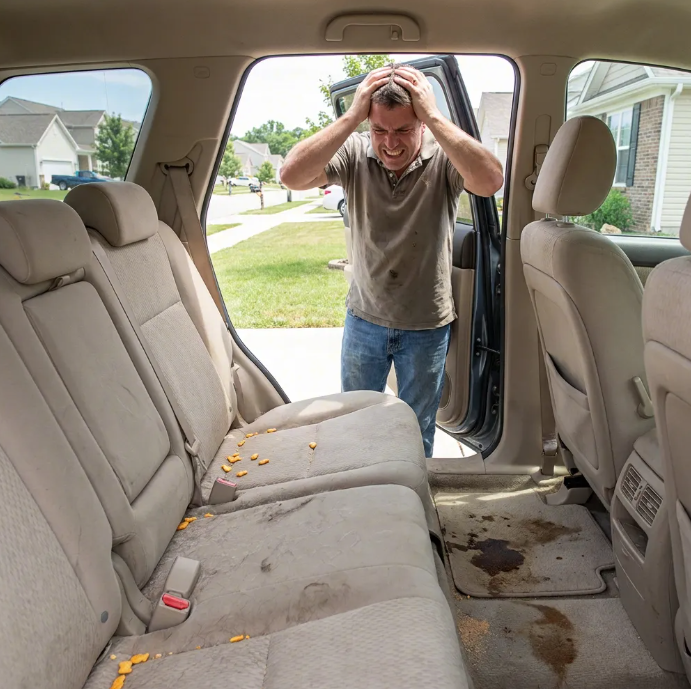
By the time the Hendersons pulled back into the driveway, the back seat looked like a crime scene. Two kids, one dog, three days. There were goldfish crackers in the seat folds, dog hair on every surface, sand tracked in from the beach stop on day two, and a juice box that had leaked quietly into the carpet somewhere around day one.
Tom's wife looked at the back seat and said she wasn't getting in the car again until it was clean. The car vacuum they owned — the corded one — was somewhere in the garage, buried, requiring a 12V cable and at least 20 minutes of finding-things-first.
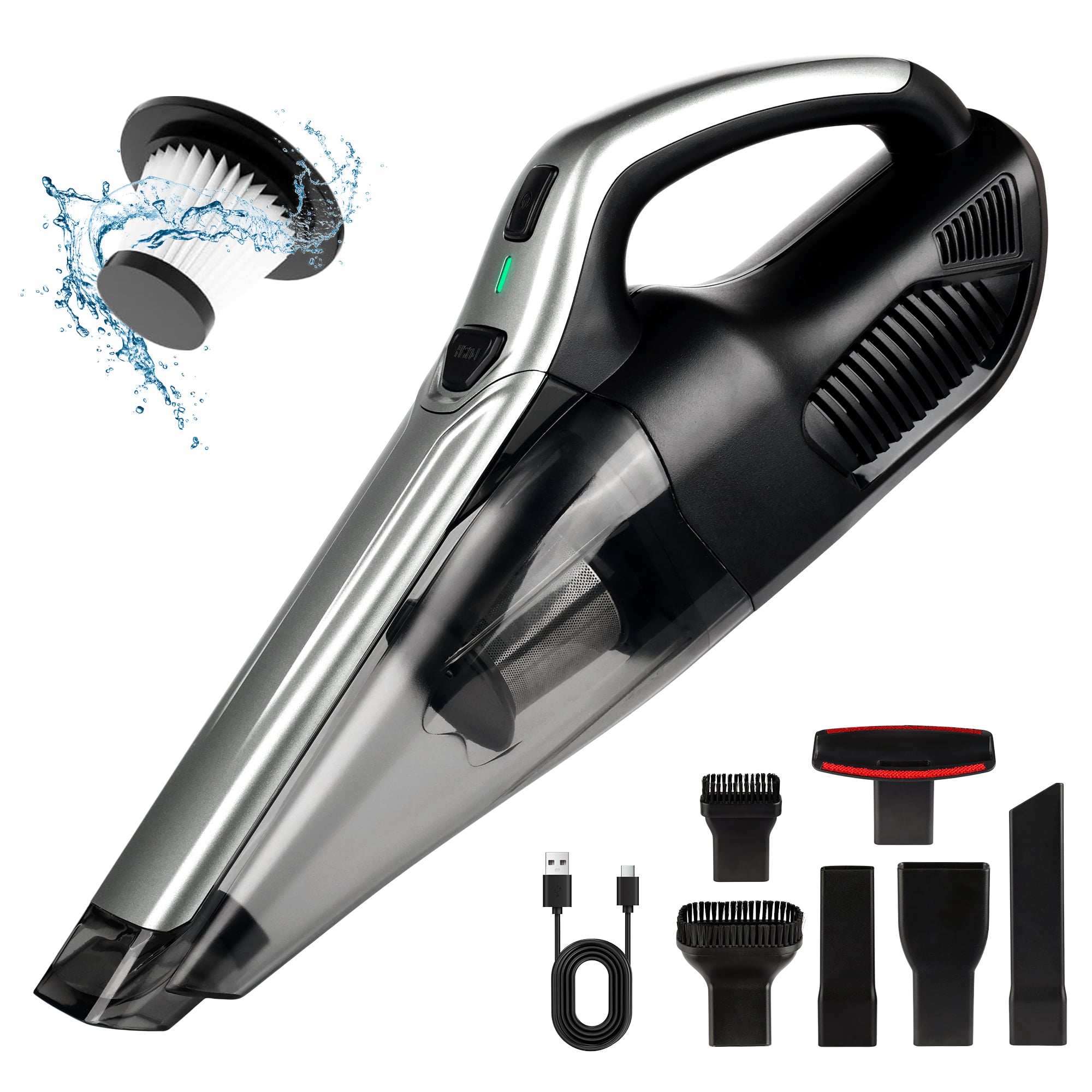
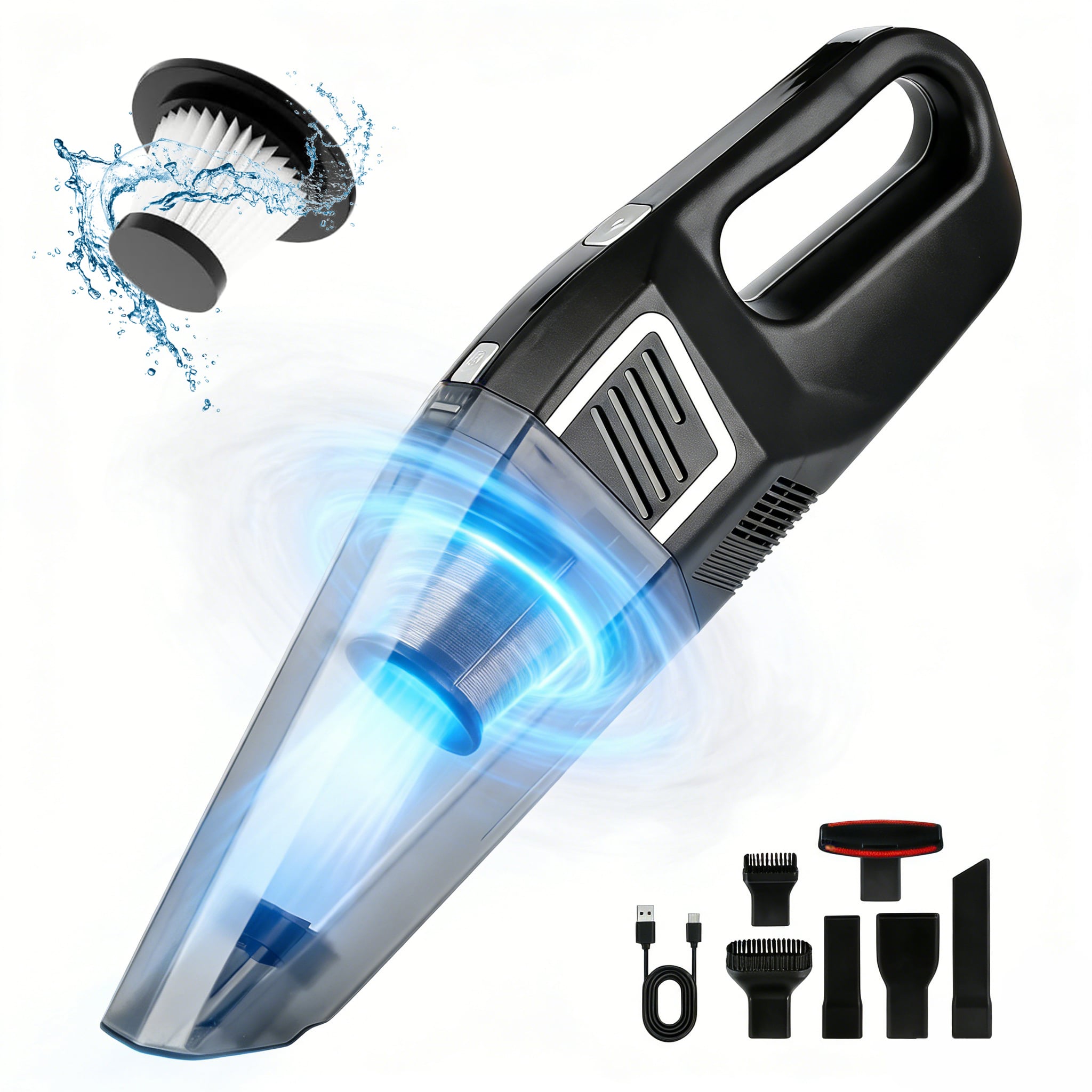
Tom grabbed the device from the trunk, swapped in the brush attachment, and started on the seats. No cord, no power outlet, no setup. The suction pulled the dog hair off the fabric in long strokes. He switched to the narrow nozzle for the seat folds and cup holders. The whole back seat took less than twelve minutes.
His wife got back in the car. The dog was already in the back seat again.
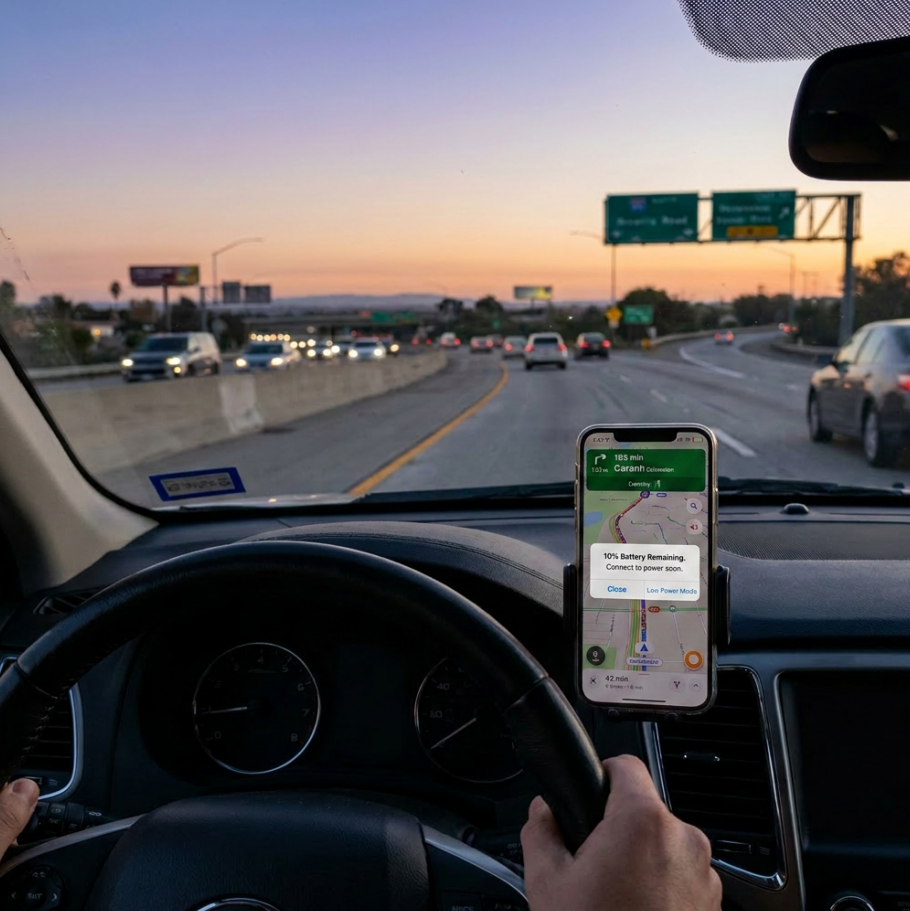
After the jump start, after the flat tire topped up, after everything was theoretically fine — the phone was at 9%. Not dead, but close enough to be useless as a navigation tool for the remaining two hours of drive. The car charger cable was at home, on the kitchen counter, where it had been sitting since Tuesday.
She plugged her phone into the USB port on the side of the device. The charging icon appeared immediately. She set the phone on the passenger seat and drove.
By the time she hit the next town, the phone was at 64%. She stopped for gas, bought a coffee, and didn't think about the battery again for the rest of the trip.
The device had already jump-started the car that morning. Then it inflated the tire. Now it was charging the phone. Same charge, same unit, still going.
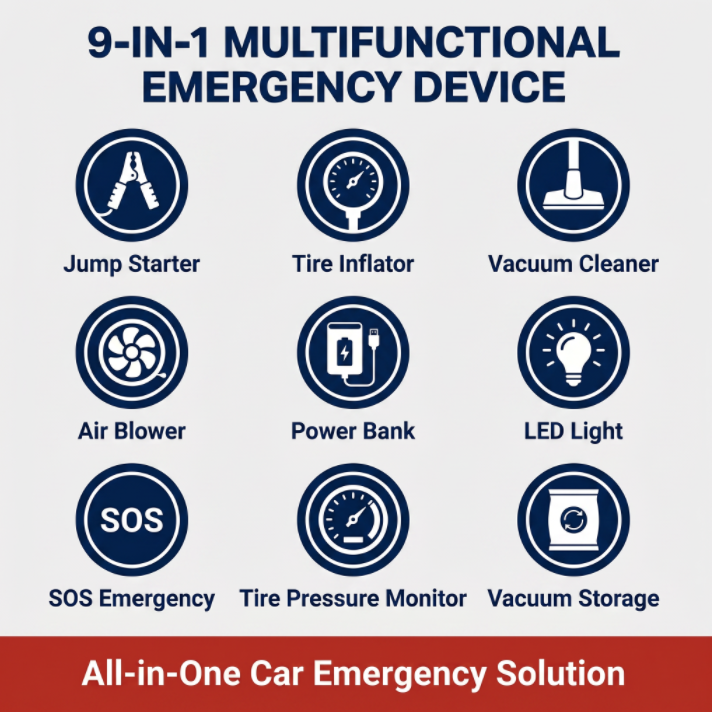
FEATURED PRODUCT
| Parameter | Value |
|---|---|
| Model | U26021 |
| Voltage | 14.8V |
| Battery Capacity | 8,000mAh (2000mAh × 4) |
| Peak Jump Current | 1000A |
| Engine Compatibility | Up to 6.0L Gasoline / 3.0L Diesel |
| Pressure Range | 3–150 PSI / 0.2–10.3 BAR |
| Pressure Units | PSI, BAR, KPA, Kg/cm² |
| Cylinder Diameter | 19mm |
| Inflation Time | 8 min (195/65/R15 car tire) |
| Inflation Qty per Charge | 3 tires (195/65/R15) |
| Vacuum Suction | 4500Pa |
| Air Blower Output | 350L/min |
| USB Output | Dual USB (Power Bank mode) |
| Charging Input | Type-C |
| Product Size | 108 × 93 × 250mm |
| Net Weight | 1KG |
| Color Box Size | 268 × 125 × 165mm |
| Color Box Weight | 1.75KG |
| PCS/CTN | 8 PCS |
| Carton Size | 51.7 × 27.7 × 34.5cm |
| Carton Weight | 14KG |
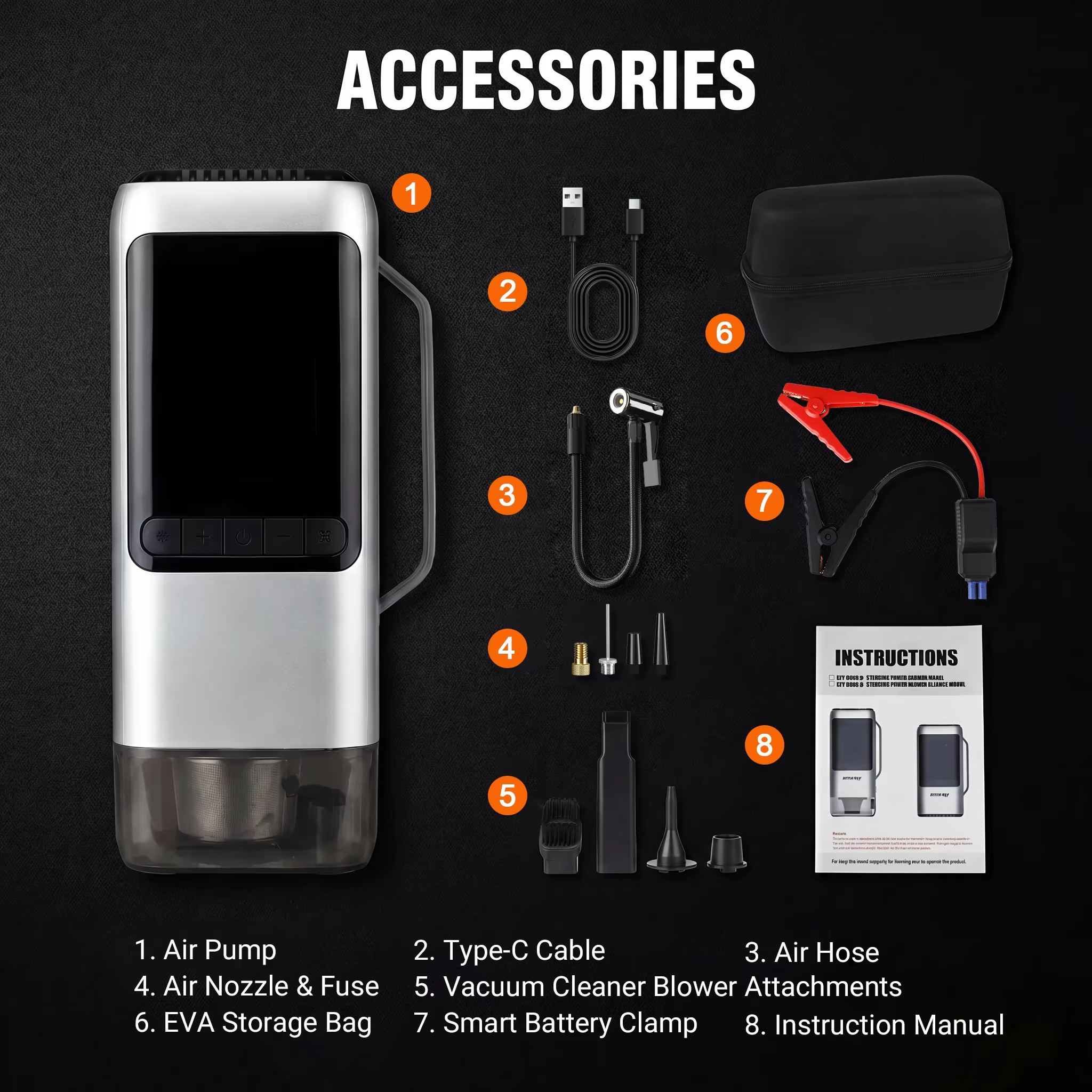
| In the Box | Device, Type-C Cable, Air Hose, Air Nozzle & Fuse, Vacuum/Blower Attachments (5 pcs), Smart Battery Clamp, EVA Storage Bag, Manual |
The four situations above aren't edge cases. Dead batteries, low tires, dirty interiors, dead phones — these are the everyday realities of car ownership for millions of consumers across North America, Europe, and Oceania. The market for portable automotive emergency devices is growing precisely because consumers are looking for consolidation: one compact unit that replaces the four or five single-function tools they'd otherwise need to carry.
The U26021 is positioned at the high end of this category. The jump starter function alone — 1000A peak, smart clamp protection, compatible with engines up to 6.0L — justifies the price point for most buyers. The tire inflator, vacuum, and power bank functions extend the use case beyond pure emergency scenarios into everyday utility, which increases purchase frequency and reduces return rates in retail channels.
FITCO sources and exports through long-term manufacturing partners anchored in Ningbo. The U26021 is available for private label, OEM customization (housing color, packaging, logo), and retail-ready configuration. Lead times, MOQ, and certification documentation available on request.
Related reads: U26021 Product Page — Full Details & Specs | Portable Tire Inflator — Roadside Guide | 44PC Emergency Kit — What's Actually in the Bag
Request a sample or get OEM pricing for the U26021. Response within 24 hours.

Shanghai Fitco: We OEM/ODM tire inflators, automotive tools & jump starters for importers, distributors, retailers all over the world for 20+ years.

Chat with us on WhatsApp
Room 1603, Zstar Plaza, No. 7, Pubei Road, Xuhui District, Shanghai, China.
Copyright © Shanghai Fitco Industrial Tools Company All Rights Reserved Privacy Policy
 EN
EN