In This Article
Most fuel problems do not happen at a gas station. They happen on a farm at 7am when the tractor runs dry before the day's work begins. They happen on a boat in the middle of a lake. They happen in a garage when a generator needs to be refueled from a storage can and there is no clean, controlled way to do it without spilling.
The nearest gas station is not always nearby. And even when it is, driving an empty vehicle there is not always possible. What people in these situations actually need is a way to move fuel from one container to another — quickly, cleanly, and without making a mess.
That is exactly what a portable fuel transfer pump is designed for. Not to replace the gas station, but to eliminate the dependency on it when you are working somewhere it cannot reach.
Consider the scale of this need: the United States has over 2 million farms and ranches — each one representing a daily need to refuel tractors, ATVs, and generators far from the nearest gas station. For these operations, a reliable way to move fuel is not a convenience. It is a basic requirement.
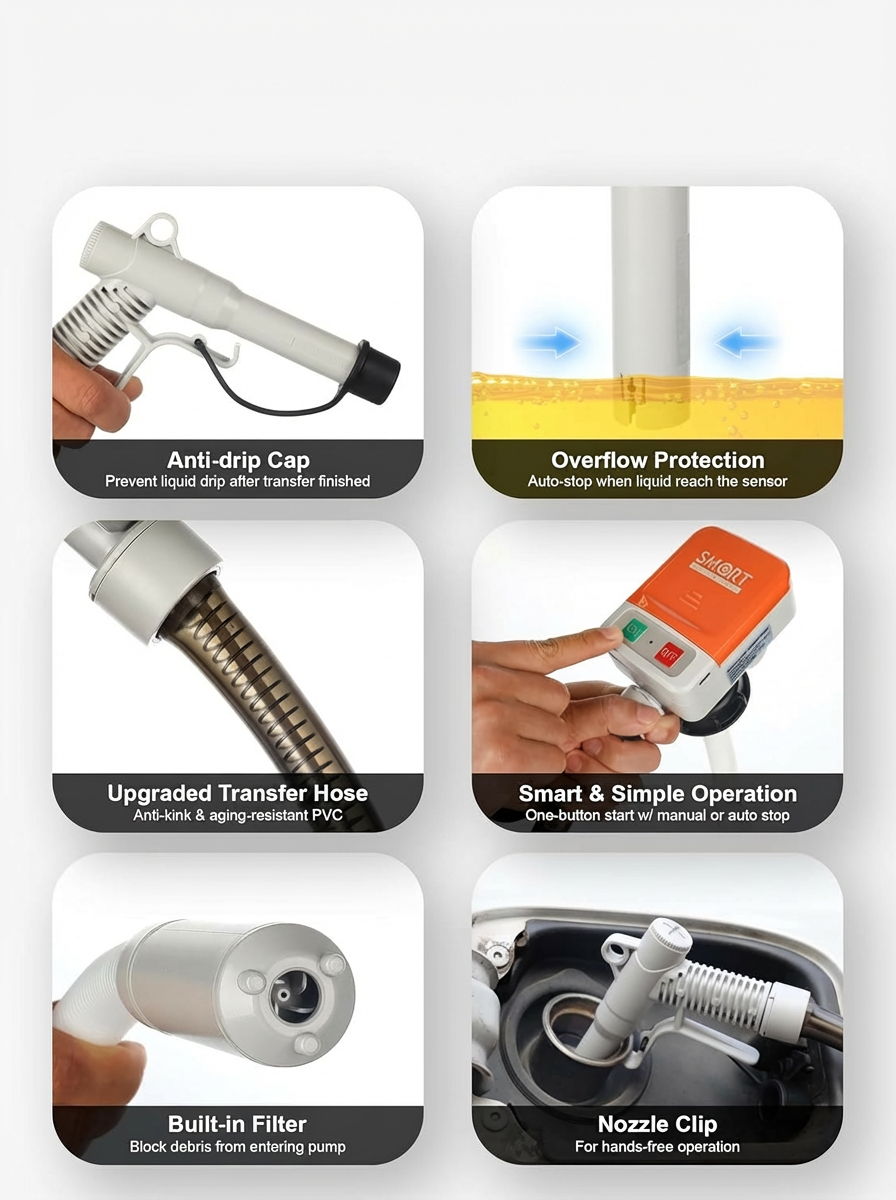
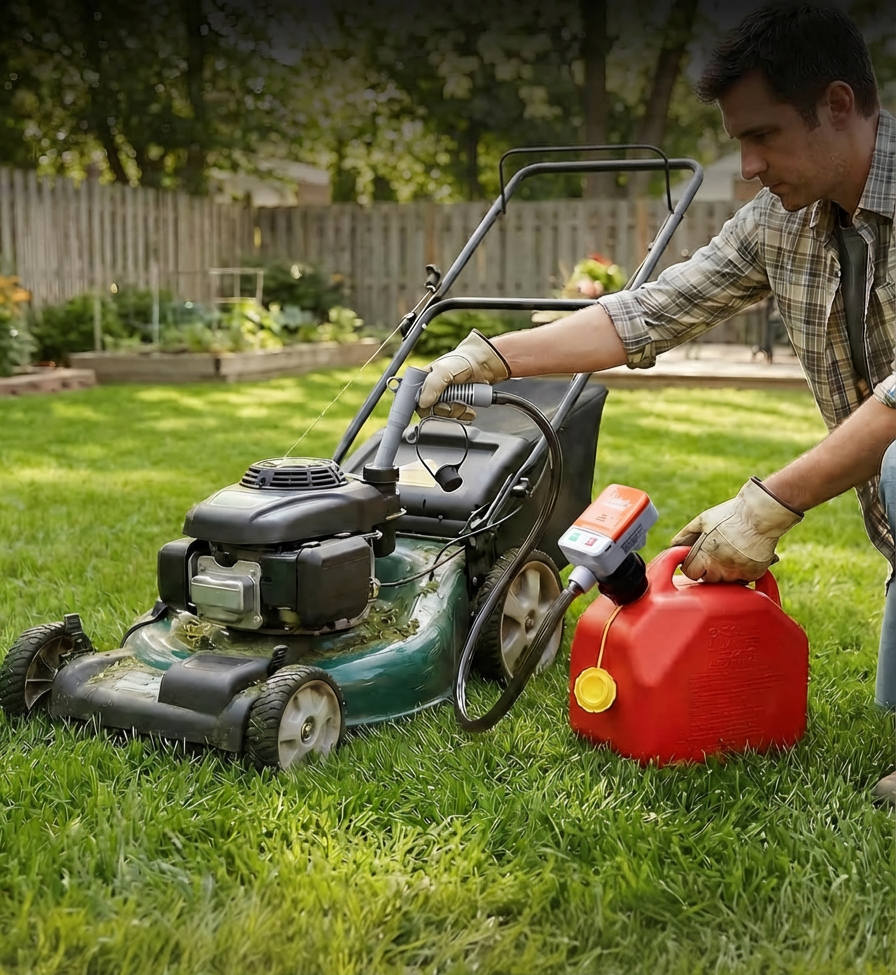
A portable fuel transfer pump moves liquid from one container to another using a motorized pump mechanism. Unlike a manual siphon — which requires suction, is slow, and carries a real risk of accidentally ingesting fuel — an electric transfer pump operates at the press of a button. You insert the intake hose into the source container, connect the output hose to the destination, press ON, and the pump does the rest.
Modern electric transfer pumps handle more than just gasoline. Diesel, kerosene, light oils, non-potable water, antifreeze, and cleaning fluids are all within range, depending on the pump's material compatibility. This versatility is what makes them genuinely useful across industries — not just automotive, but marine, agricultural, and industrial maintenance.
The key features that separate a good pump from a bad one are straightforward: flow rate (how fast it moves liquid), auto-stop (whether it cuts off when the destination is full, preventing overflow), hose quality (whether it kinks, cracks, or degrades with fuel exposure), and power flexibility (whether it works when there is no outlet nearby).
These are not marketing features. They are the difference between a pump that works reliably in the field and one that fails when you need it most.
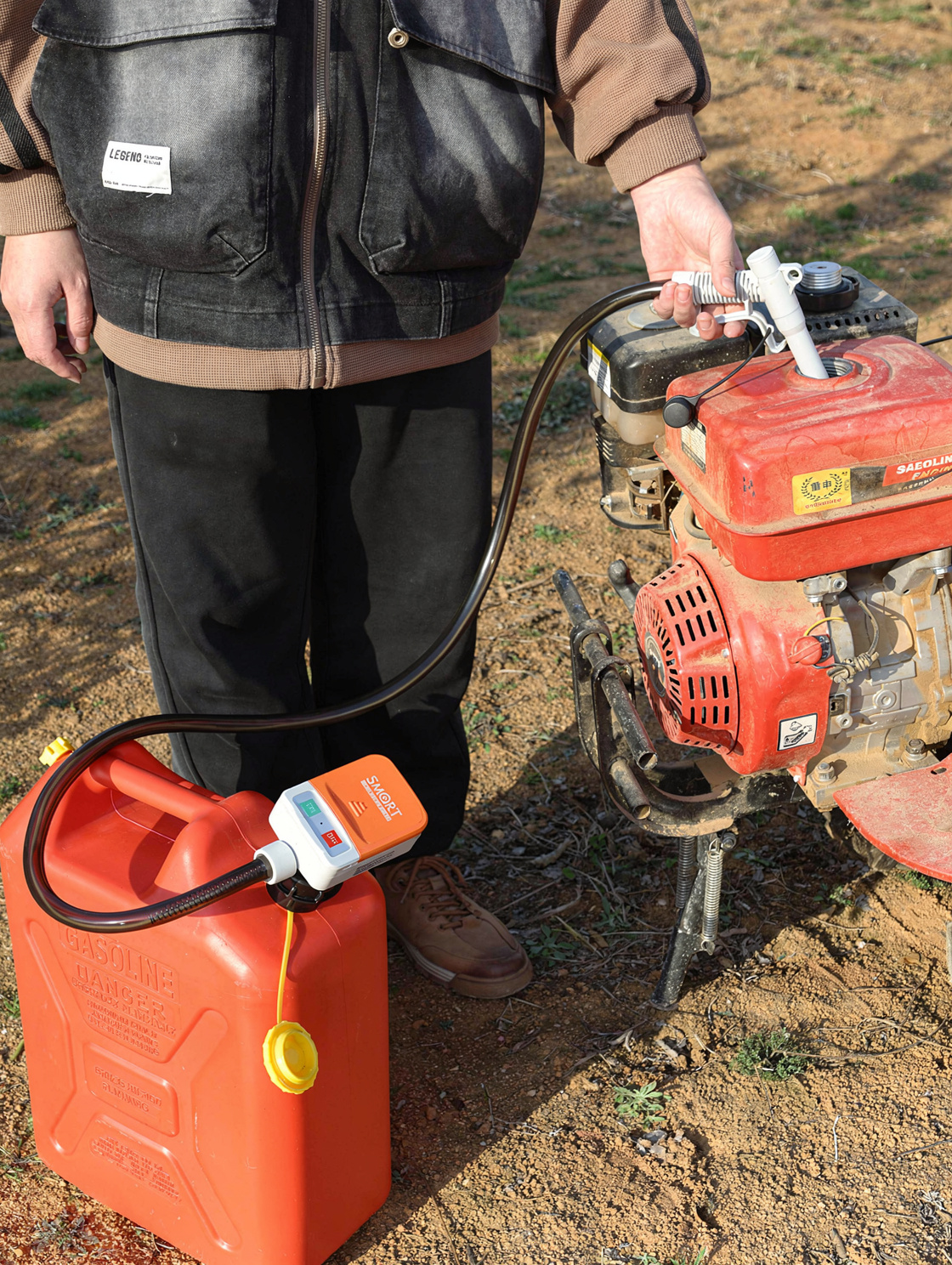
1. Farm and agricultural equipment. Tractors, tillers, irrigation pumps, and ATVs all run on gasoline or diesel. Refueling them from 5-gallon cans by hand — lifting, tilting, pouring — is slow, physically demanding, and almost always results in spills. A transfer pump handles the job in under two minutes without lifting the can.
2. Boats and marine use. Portable fuel tanks on boats need to be refueled regularly, and doing it at a marina is not always convenient or affordable. A transfer pump lets you refuel from shore-side storage cans directly into the boat's tank, cleanly and without the risk of spilling fuel into the water.
3. Generators and backup power. Home generators and commercial backup power systems need to be refueled during extended outages — often in the dark, in bad weather, with no help nearby. A transfer pump with a long hose and auto-stop function makes this a one-person job that takes minutes instead of a messy, risky manual pour.
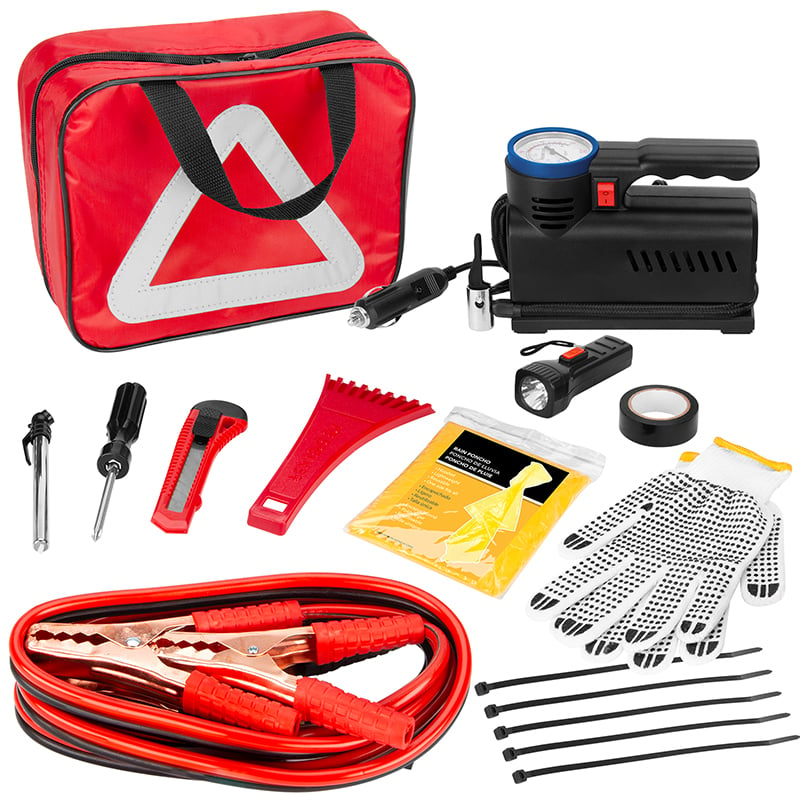
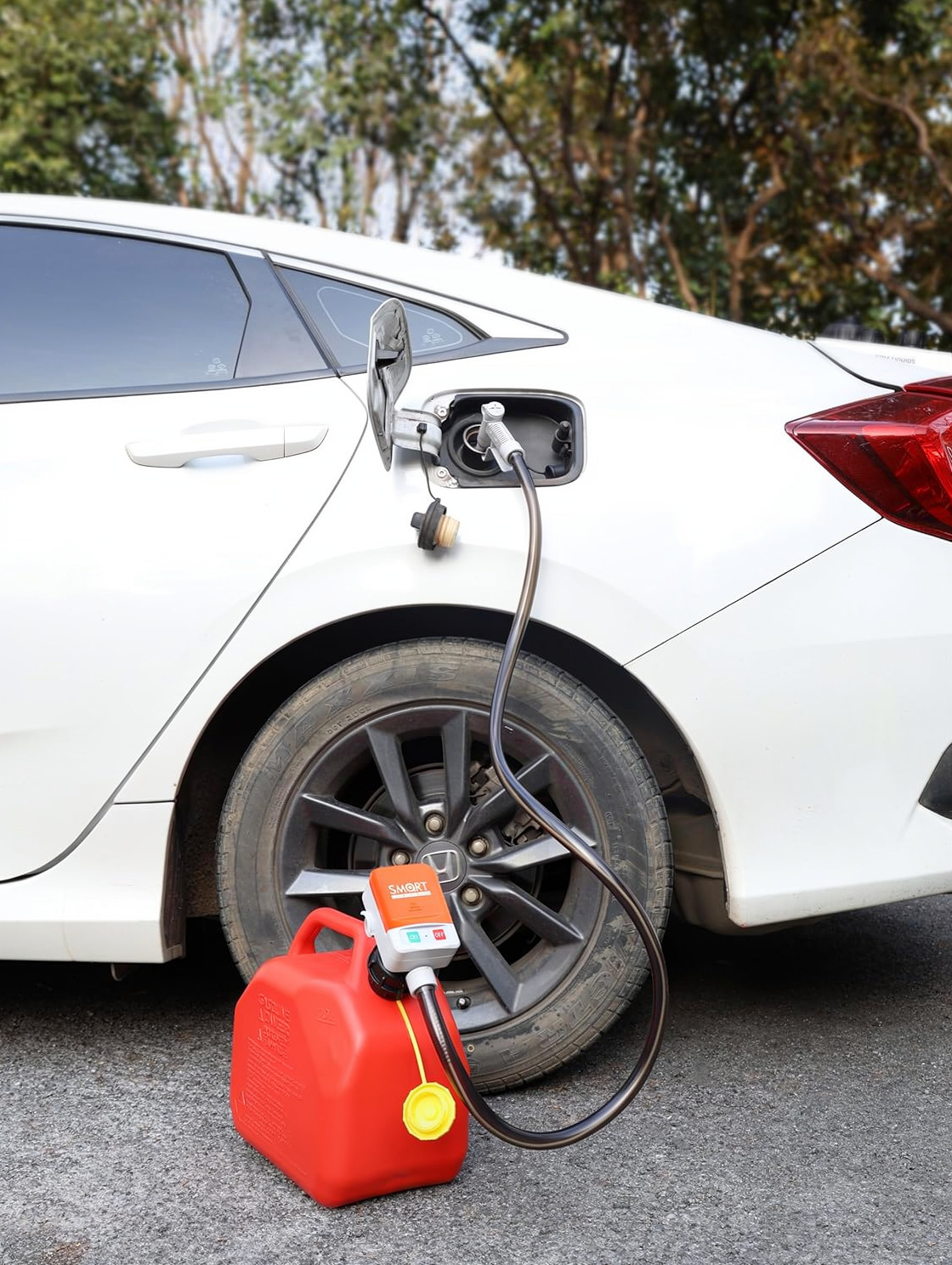
4. Emergency roadside fuel. Running out of fuel on a remote road is not uncommon. Carrying a 5-gallon reserve can in the trunk is a practical solution — but pouring from a full can into a car's fuel filler is awkward and often spills. A transfer pump with a flexible nozzle and the right adapter makes this clean and fast. For a complete roadside preparedness kit, see our guide on what to keep in your trunk for roadside emergencies.
5. Workshop and fleet maintenance. Mechanics and fleet operators who manage multiple vehicles often need to drain fuel from tanks before service, or top up vehicles from bulk storage. A transfer pump handles both directions — in and out — with the same tool.
Flow rate. Measured in gallons per minute (GPM). A pump rated at 2 GPM will take twice as long as one rated at 4 GPM to transfer the same amount of fuel. For occasional home use, 2 GPM is acceptable. For regular agricultural or fleet use, 3.5 GPM or higher is the practical minimum.
Auto-stop / overflow protection. This is non-negotiable for any serious use. A pump without auto-stop will overflow the destination container if you are not watching it constantly. Look for a sensor-based system that detects liquid level and cuts off the pump automatically — not just a timer, which is unreliable.
Power source flexibility. In the field, you may not have access to a wall outlet. A pump that runs only on AC power is useless on a boat or in a remote location. Look for a pump that supports multiple power inputs: AA batteries for true off-grid use, USB-C for convenience, and DC 12V car adapter for vehicle-based operation.
Hose quality and length. Short hoses (under 40 inches) are frustrating to use with large containers. Anti-kink, fuel-resistant hose material is essential — standard PVC degrades with prolonged fuel contact. A 51-inch hose is the practical minimum for comfortable use across most container and tank configurations.
Certifications. For B2B buyers, certifications determine which markets a product can be sold in. CE and UKCA cover Europe and the UK. CSA covers Canada. ATEX certification indicates the pump is rated for use in potentially explosive atmospheres — relevant for industrial and commercial fuel handling. RoHS compliance covers hazardous substance restrictions required in most regulated markets.
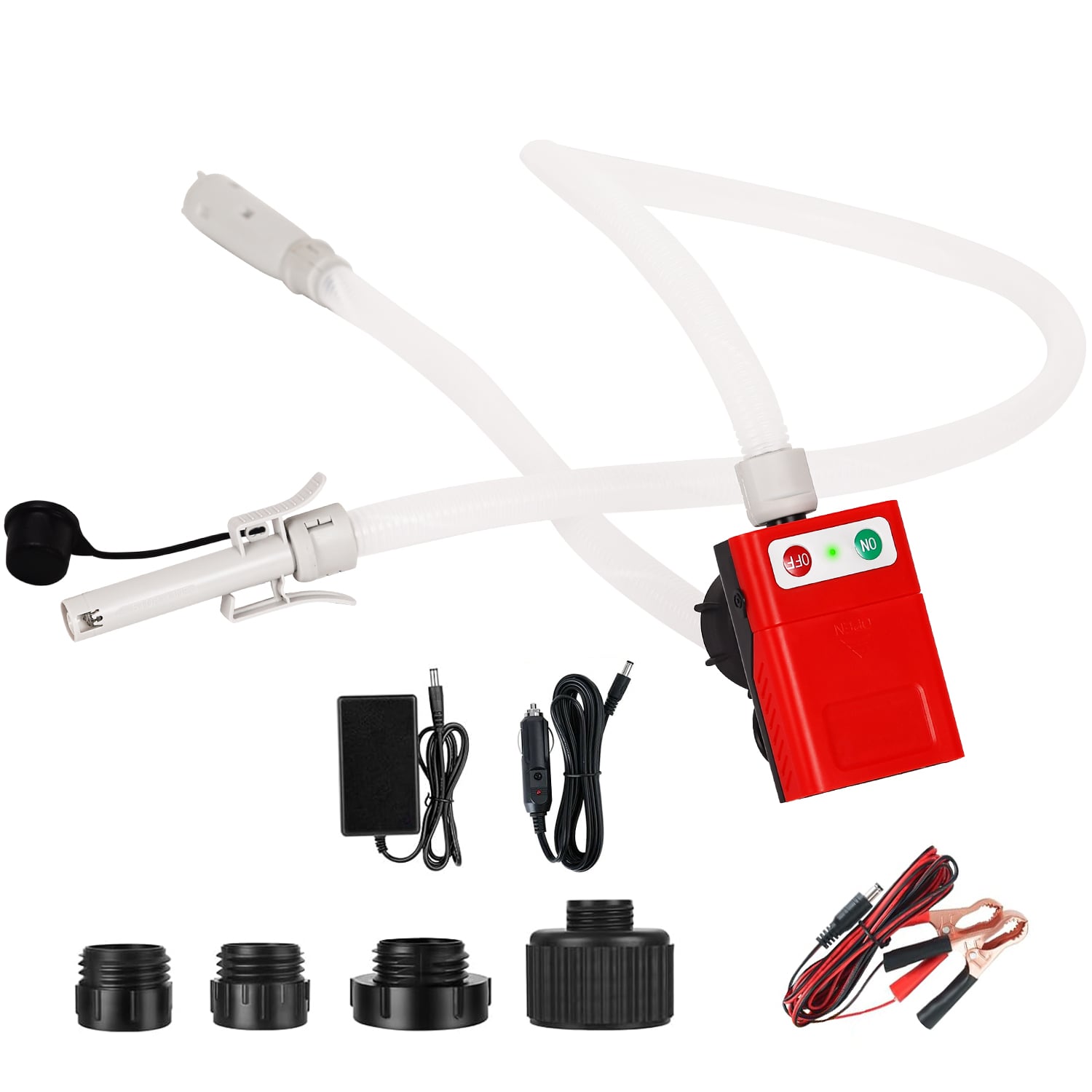
The Fitco F6003 is an OEM/ODM electric fuel transfer pump built around the requirements outlined above. It is available for private label and custom configuration for importers, distributors, and retailers sourcing in the automotive, marine, agricultural, and emergency preparedness categories.
| Specification | Detail |
|---|---|
| Model | F6003 |
| Flow Rate | 3.8 GPM average |
| Power Sources | 4 AA batteries / 2 AA batteries (emergency) / USB-C / DC 12V car adapter |
| Hose Length | 51 inches (output) + 19 inches extended intake |
| Hose Material | Anti-kink, aging-resistant PVC |
| Auto-Stop | Sensor-based overflow protection with audible alarm |
| Nozzle | Anti-drip cap + hands-free nozzle clip |
| Can Adapters | 4 sizes: 2" / 2.1" / 2.75" / 3.75" (North American standard) |
| Compatible Liquids | Gasoline, diesel, kerosene, light oils, non-potable water, antifreeze, cleaning fluids |
| Certifications | ATEX, CE, RoHS, UKCA, CSA |
| Origin | China (OEM/ODM available) |
The portable fuel transfer pump category has grown consistently as more consumers and small businesses invest in off-grid capability, backup power, and self-sufficiency. Demand is particularly strong in North America and Europe across the outdoor recreation, agricultural, and emergency preparedness segments.
For distributors and retailers sourcing in this category, the key differentiators are certifications (which markets the product can enter), power flexibility (which use cases it covers), and reliability of the auto-stop mechanism (which drives reviews and repeat purchases). Products that fail on overflow protection generate returns and negative feedback at a disproportionate rate.
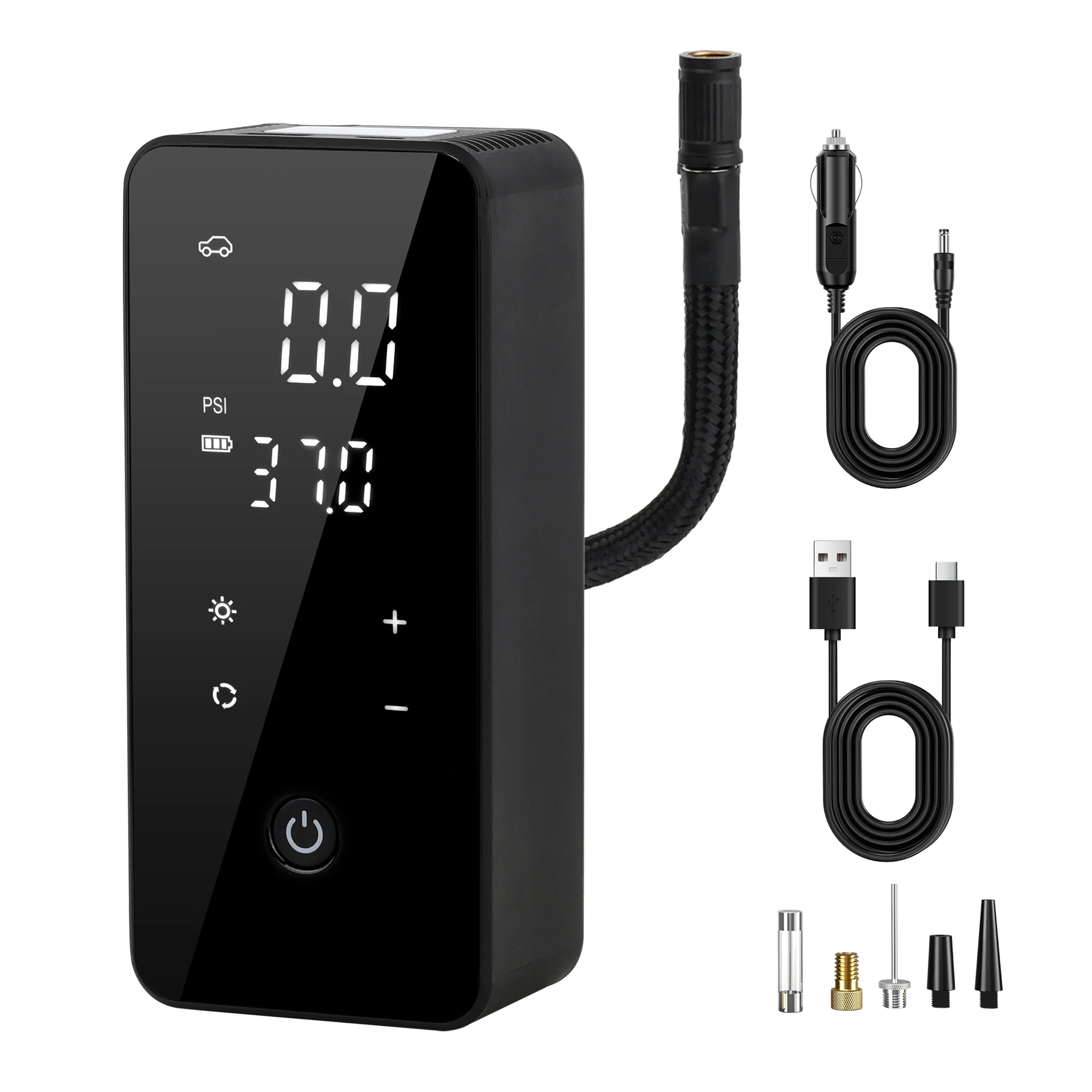
Fitco manufactures the F6003 in OEM and ODM configurations with full certification support for North American and European markets. Minimum order quantities, lead times, and custom branding options are available on request. If you are also sourcing tire inflators or roadside emergency kits, see our guides on the cordless tire inflator and the 44PC roadside emergency kit.
Contact Fitco for samples, OEM pricing, certifications, and lead time. Response within 24 hours.

Shanghai Fitco: We OEM/ODM tire inflators, automotive tools & jump starters for importers, distributors, retailers all over the world for 20+ years.

Chat with us on WhatsApp
Room 1603, Zstar Plaza, No. 7, Pubei Road, Xuhui District, Shanghai, China.
Copyright © Shanghai Fitco Industrial Tools Company All Rights Reserved Privacy Policy
 EN
EN