EN
EN

Мазмұны
- Жабдықтау мәселесі: аккумуляторлы немесе 12 В-тық шиналардың ауасын толтырғышы
- Терең талдау: аккумулятормен жұмыс істейтін шиналардың ауасын толтырғыштарының механикасы
- Терең талдау: 12 В-тық розеткадан қосылатын шиналардың ауасын толтырғыштарының сенімділігі
- Инженерлік компромисс: неге екі қуат көзі бар құрылғы — болашақ
- Объективті салыстыру: аккумуляторлы, 12 В-тық және екі қуат көзі бар құрылғылар
- Жалпы иелік шығындары мен OEM-дердің қосымша өзгертулері
1. Жабдықтау мәселесі: аккумуляторлы немесе 12 В-тық шиналардың ауасын толтырғышы
Солтүстік Америкадағы бір автокомплектующилар дистрибьюторы жақында ортақ қиналысын бөлісті: олардың соңғы пайдаланушылары сымсыз ауа толтырғыштардың қолайлылығын ұнатады, бірақ қатты қыста шина толығымен жазылған кезде аккумулятор 35 PSI мақсатына жетуге дейін жиі таусылады. Алайда, олардың дәстүрлі 12 В-тық розеткадан қосылатын моделдері әрқашан қуатынан айырылмайды, бірақ пайдаланушылар жиі қарда қатты, қысқа сымдармен күресуден шағымданады.
Бұл жағдай аккумуляторлы немесе 12 В-тық шиналардың ауасын толтырғышын таңдау кезіндегі негізгі пікірталасты идеалды түрде сипаттайды. аккумуляторлы немесе 12 В-тық шиналардың ауасын толтырғышы сіздің B2B сатып алу стратегияңыз үшін. Импортерлер мен аймақтық брендтер тұрақты түрде литий-иондық технологияның заманауи ыңғайлылығы мен тікелей көлік қозғалтқышына қосылуының сенімділігі арасында таңдау жасауға мәжбүр болады. Сіздің мақсатты аудиторияңыз үшін дұрыс емес таңдау қайтарылу көрсеткіштерінің өсуіне, теріс пікірлерге және бренд репутациясының зақымдануына әкелуі мүмкін.
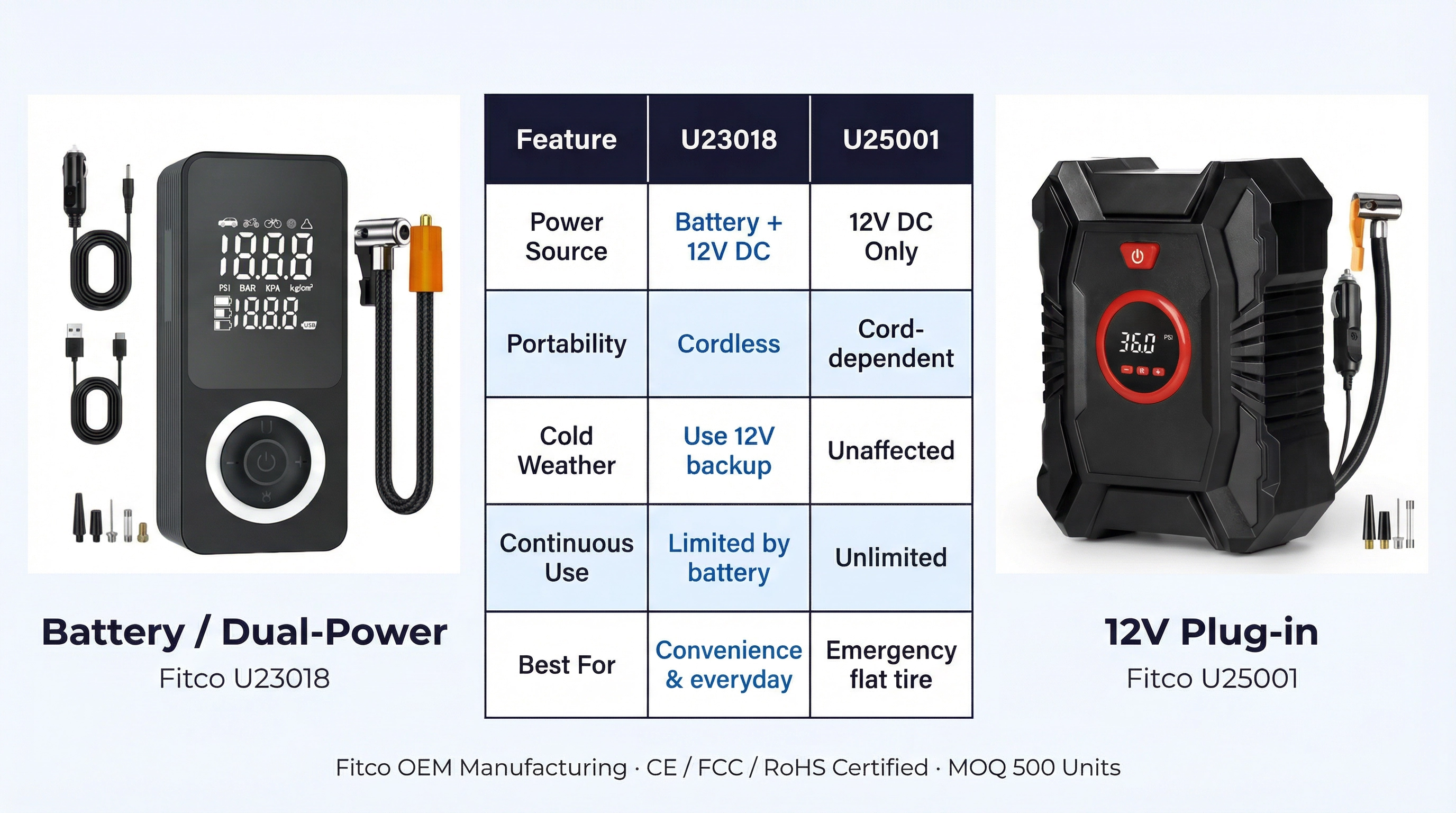
ҚЫСҚАША
Аккумуляторлы немесе 12 В-тық шиналардың ауасын толтырғышты бағалаған кезде, сатып алушылар соңғы дәрежедегі мобильділікті үздіксіз, тоқтамайтын қуатпен салыстыруы керек. 2026 жылы Екі қуатты (12 В + сымсыз) құрылғылар — екеуінің де ең жақсы қасиеттерін ұсынатын саладағы стандарт ретінде тез қалыптасып келеді.
2. Терең талдау: Аккумуляторлы шиналардың ауасын толтырғыштардың механикасы
Батареялық қоректенетін немесе сымсыз ауа шегіндері соңғы бес жылда тұтынушылар нарығында басымдыққа ие болды. Ішкі литий-ионды батареялармен қоректенетін бұл құрылғылар қозғалыс еркіндігінің салыстырмасыз деңгейін ұсынады. Пайдаланушылар көлік құралының айналасында еркін жүріп, велосипедтің доңғалақтарын ауаға толтырып немесе спорттық жабдықтардың ауасын толтыру үшін көліктің аспаптар панеліне қосылмай-ақ оңай жұмыс істей алады.
Дегенмен, инженерлік тұрғыдан қарағанда, таза батареялық қоректенетін құрылғылар қатаң физикалық шектеулерге ие. Литий-ионды батареялар нөлдің астындағы температурада қатты разрядтау сыйымдылығының төмендеуіне ұшырайды. Бір расталған Amazon рецензенті дәл осылай деп белгілеген: "Ол 150 PSI-ға дейін қолдайды, бірақ толығымен жазылған доңғалақты толықтай ауаға толтыруға қарағанда, тек ауасын толықтыруға ғана жарамды." Ауыр SUV доңғалағын 0-ден 35 PSI-ға дейін көтеруге қажетті тұрақты ампераж қатты жылу бөледі және стандартты батареяларды тез разрядтайды.
Fitco Инженерлік көзқарасы
Батареяға деген қорқынышты жеңу үшін Fitco мынандай құрылғыны жасады: U23018 3×2500 мА·са батареялық қоры мен ішкі 12 В тұрақты ток резервті порты бар. Батарея шамасы азайған кезде де пайдаланушылар қондырғыны тікелей көліктің 12 В розеткасына қосып, үзіліссіз жұмыс істей алады — бұл батареяның толығымен разрядталу қаупін толығымен жояды. Бұл екі қуатты архитектура U23018 моделін күндәлікті қосымша ауа толтыруға және жол жағындағы авариялық жағдайларға сенімді таңдау етеді.
3. Терең талдау: 12 В розеткаға қосылатын дөңгелек иілткіштердің сенімділігі
12 В розеткаға қосылатын дөңгелек иілткіштер — жол жағындағы авариялық жабдықтардың дәстүрлі жұмысшысы. Бұл қондырғылар көліктің 12 В тұрақты ток розеткасынан тікелей қуат алады және автомобильдің электр шығысын механикалық сорғыш қуатына айналдырады. Негізгі артықшылығы — абсолюттік сенімділік: көліктің қозғалтқышы жұмыс істеп тұрған шамада иілткішке шексіз қуат беріледі.
Бұл 12В модельдерді ауыр жүк applicationsfully толықтай тегіс шиналарды үрлеу, үлкен көліктерді қызмет көрсету немесе кезең-кезеңімен қайта зарядтаусыз сандықта жылдар бойы сақтау үшін қолайлы етеді. Алайда, кемшіліктері ергономиялық жағынан ғана. Пайдаланушылар арқанның ұзындығына байланысты шектеледі, ал үлкен көліктерде, мысалы пикаптарда, жолаушының артқы жағындағы дөңгелекке жету қиын болуы мүмкін.
Fitco Инженерлік көзқарасы
Fitco 12В жүйелеріндегі жалпы шағымдарды жоғары сапалы ішкі компоненттер арқылы шешеді. Біздің U25001 12В цифрлық шинаны үрлеуші (100 ПСИ, 14,93 АҚШ доллары ) тиімді жылу таратуды басқару және автоматты түрде өшіру функциясы бар жаңартылған қозғалтқышты қамтиды. Бұл құрылғының мақсатты қысымда дәл тоқтап қалуын қамтамасыз етеді, қозғалтқыштың күйіп кетуін болдырмайды және қауіпсіз, нақты инфляция процесін қамтамасыз етеді.
Автоаксессуарлар каталогыңызды жаңартуды қалайсыз ба?
Көшіргіштілік пен қуат арасында таңдауды тоқтатыңыз. Fitco-ның OEM өндіріс мүмкіндіктері өз брендіңіздің астында нарықтағы жетекші қос қуатты шина үрлеушісін шығаруға қалай көмектесетінін біліңіз.
Бесплаттік OEM үлгісін қазір тапсырыңыз →4. Инженерлік компромисс: Неге екі көзді қуаттандырғыш — батареялық және 12 В-тық шиналардың ауасын толтырғыштар нарығының болашағы?
Тұтынушылардың күтімдері өзгерген сайын, батареялық және 12 В-тық шиналардың ауасын толтырғыштар арасындағы қатаң шекара баяу жойылып барады. Қазіргі заманғы шешім — екі көзді қуаттандырғыш: ол қайта зарядталатын литий-ионды батарея мен 12 В тұрақты ток адаптерін біріктіретін гибридті архитектура.
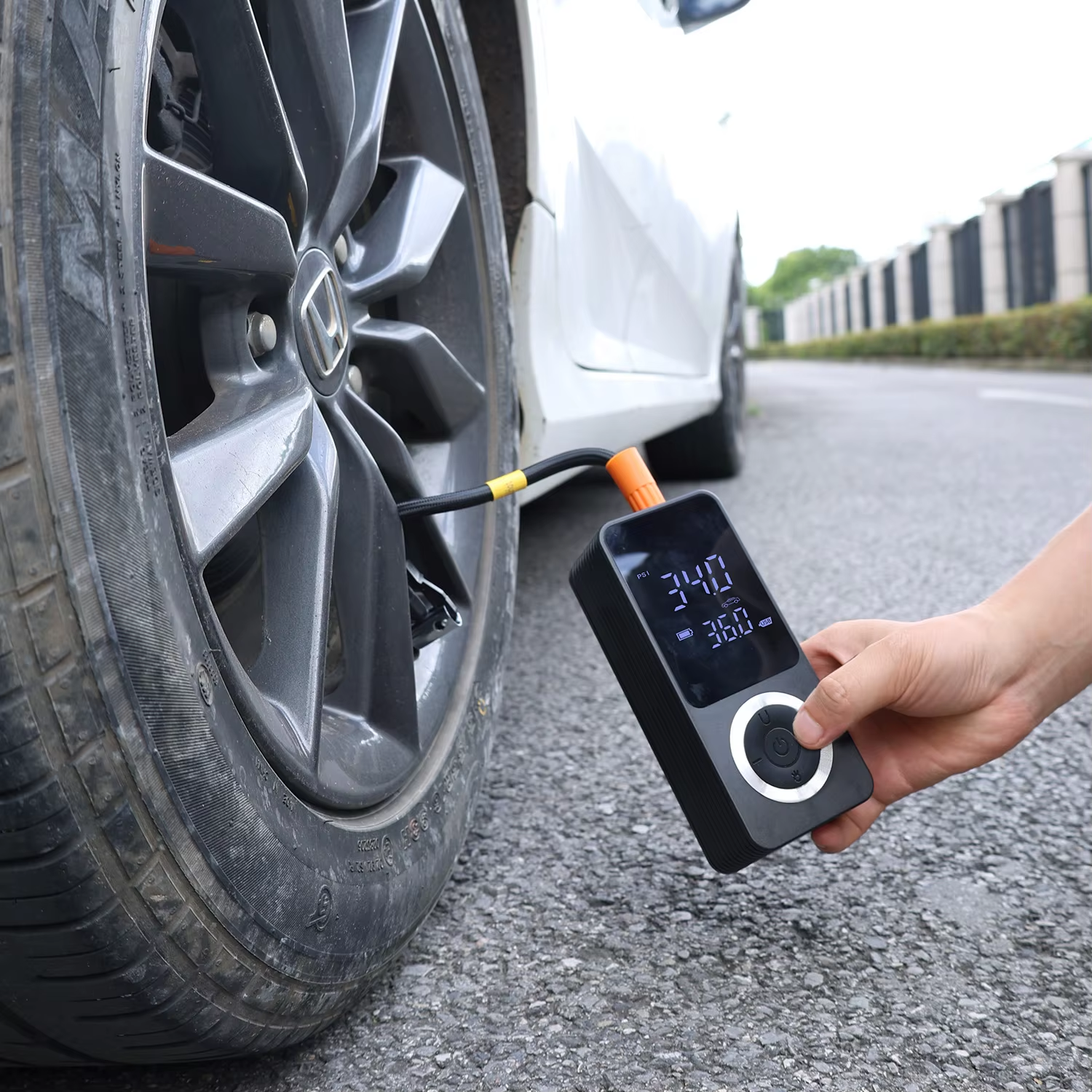
Бұл дизайн «батарея өшіп қалды» деген мәселені толығымен жояды. Егер пайдаланушы құрылғыны зарядтауды ұмытса немесе үлкен камаз шинасын ауасын толтыру кезінде батарея толығымен разрядталса, ол 12 В адаптерін көлікке қосып, тоқтамай жұмысын жалғастыра алады. Нақты өмірдегі пайдаланушылардың пікірлері осы тәсілді растайды: "Екі көзді қуаттың икемділігі: үйде қайта зарядталатын батареямен немесе көлікте жүріп отырған кезде — өте ыңғайлы... уақыт үнемдейді." (Расталған Amazon сатып алушысы, 2025 жылғы шілде)
Fitco Инженерлік көзқарасы
The Fitco U23018 бұл нарықтағы өзгеріске қарсы біздің негізгі жауабымыз. Ол 3×2500 мА·сағ аккумуляторлық қорап арқылы 150 PSI қысымды қамтамасыз етеді және шина қысымын 31-ден 36 PSI-ге дейін бар болғаны 54 секундта көтере алады. Құрылғыға қосымша 12 В тұрақты токпен қосылатын резервті қосқыш, 3-in-1 авариялық LED жарық (ақ/қызыл жанып-сөну/SOS) және дәл цифрлық қысым өлшегіш кіреді — осылайша бұл тек ауа сорғысы емес, толыққанды жол бойындағы қауіпсіздік құралы болып табылады. Бастапқы бағасы: 20,89 АҚШ доллары .
5. Мақсатты салыстыру: Аккумуляторлық қорек vs. 12 В тұрақты ток vs. Екі типті қорек
Сізге ақпаратты сатып алу шешімін қабылдауға көмектесу үшін, үш негізгі құрылымды критикалық өнімділік көрсеткіштері бойынша тікелей салыстыру келтірілген.
| Сипаттама / Өлшем | Таза аккумуляторлық қорек | Таза 12 В тұрақты токпен қосылу | Екі типті қорек (гибридті) |
|---|---|---|---|
| Қуат көзі | Ішкі Li-ion аккумуляторы | Автокөліктің 12 В тұрақты ток розеткасы | Аккумулятор + 12 В тұрақты ток розеткасы |
| Көшіргіштігі | ✅ Өте жақсы | ⚠ Сыммен шектелген | ✅ Өте жақсы |
| Үздіксіз Жұмыс | ⚠ Аккумулятормен шектелген | ✅ Шексіз (қозғалтқыш іске қосылған кезде) | ✅ Қажет болса, 12 В-қа ауысуға болады |
| Суық ауа-райында жұмыс істеу | ❌ Аккумулятордың тозуы | ✅ Әсер етілмейді | ✅ Аса суық кезінде 12 В-ты қолданыңыз |
| Негізгі қолдану сценарийі | Жедел тоқтау, велосипед, доптар | Қатты жүк тасымалдауға арналған тегіс дөңгелектер | Барлық сценарийлер, жоғары сапалы жиынтықтар |
Fitco Инженерлік көзқарасы
Қай архитектураны таңдағаныңызға қарамастан, Fitco OEM-нің толыққанды жекешелендіруін қолдайды: кассаның жекешеленген түстері, өнім логотипінің жібектік скрининг және көптілді нұсқаулықтар. Біздің қол жетімді MOQ тек 500 бөлім орта көлемді брендтерге жергілікті нарықтарда үлкен қор тәуекелдерін бастан кешірмей, әртүрлі модельдерді сынауға мүмкіндік береді.
6. Иемдіктің жалпы құны және OEM-нің жекешелендіруі
Сатып алу стратегиясын аяқтағанда бастапқы бірлік құны теңдеудің бір бөлігі ғана. Жалпы меншік құнына (TCO) жүк тасымалдау салмағы, ақаулар деңгейі және клиенттердің қайтарымын өңдеу құны кіреді.
Fitco U25001 сияқты таза 12В модельдері (бастапқы бағасы 14,93 АҚШ доллары) кіру үшін ең төменгі кедергілерді ұсынады және өте сенімді, нәтижесінде техникалық ақаулар салдарынан өте төмен қайтарым деңгейі. U23018 (US $ 20,89 бастап) және ауыр жүк U23019 (US $ 26,99 бастап) секілді қос қуатты модельдер жоғары бастапқы инвестицияны талап етеді, бірақ айтарлықтай жоғары пайда табу маржаларын ұсынады және қазіргі тұтынушылардың көпжақтылық сұраныстарына сәйкес келеді.
Fitco Инженерлік көзқарасы
Сапаны бақылау - бұл жоғары TCO-ға қарсы ең жақсы қорғаныс. Fitco кәсіби QA/QC тобымен жұмыс істейді және оның аутентикалық сертификаттары бар, соның ішінде CE, RoHS, FCC және ISO . Intertek сертификаты бар жеткізуші ретінде біз сіз батареямен жұмыс істейтін, 12В немесе қос қуатты үрлеушіге сатып алсаңыз да, өнім Солтүстік Америка мен Еуропаның қатаң нарық қатынасы стандарттарына сәйкес келетінін қамтамасыз етеміз.
Шымшаларды өсіру желісін жасауға дайынсыз ба?
Сізге бюджеттік тұтынушылар үшін жеңіл 12 В сорғысы керек пе немесе кәсіби қолдану үшін премиум-деңгейлі 20 В екі қуатты жүйе керек пе — Fitco компаниясы осы өнімдерді шығару үшін инженерлік қабілеті мен жеткізу тізбегінің инфрақұрылымын ұсынады.
Біздің инженерлік тобымызбен байланыс → Жабдықтаушы қабілеттерін қарауFitco жеткізу тізбегінің инженерлік тобы
Шанхай Fitco Industrial Tools компаниясы — автомобильдік құралдардың OEM өндірісі бойынша 9 жылдық тәжірибесі бар, Солтүстік Америка мен Еуропадағы импортерлер мен брендтерге қызмет көрсетеді.
Мазмұны
- 1. Жабдықтау мәселесі: аккумуляторлы немесе 12 В-тық шиналардың ауасын толтырғышы
- 2. Терең талдау: Аккумуляторлы шиналардың ауасын толтырғыштардың механикасы
- 3. Терең талдау: 12 В розеткаға қосылатын дөңгелек иілткіштердің сенімділігі
- 4. Инженерлік компромисс: Неге екі көзді қуаттандырғыш — батареялық және 12 В-тық шиналардың ауасын толтырғыштар нарығының болашағы?
- 5. Мақсатты салыстыру: Аккумуляторлық қорек vs. 12 В тұрақты ток vs. Екі типті қорек
- 6. Иемдіктің жалпы құны және OEM-нің жекешелендіруі